
By Wendy Osborne OBE, Senior Consultant, IAVE
Volunteering brings radical generosity to life. By giving their time, people affirm our shared humanity and help build the coVolunteering brings radical generosity to life. By giving their time, people affirm our shared humanity and help build the conditions in which communities can flourish. The Call to Action for the Future of Volunteering cites IAVE’s 2001 Universal Declaration, which describes volunteering as “a fundamental building block of community and civic life” that “brings to life the noblest aspirations of humankind – the pursuit of peace, freedom, opportunity, safety, and justice for all people”. GivingTuesday, IAVE’s partner in Generosity Week, expresses the same principle through “radical generosity,” the belief that the suffering of others should be as intolerable to us as our own, inspiring people to act in ways that support and uplift their communities.
Volunteers often describe their motivation as a desire to “give back,” to support others and their communities in recognition of the benefits they themselves have received. Yet many state that, through volunteering, they gained as much as, if not more than, they gave. As we celebrate International Year of Volunteers for Sustainable Development (IVY 2026), we should recognize volunteering not as a one-way act of service, but as a reciprocal practice shaped by the following principles.
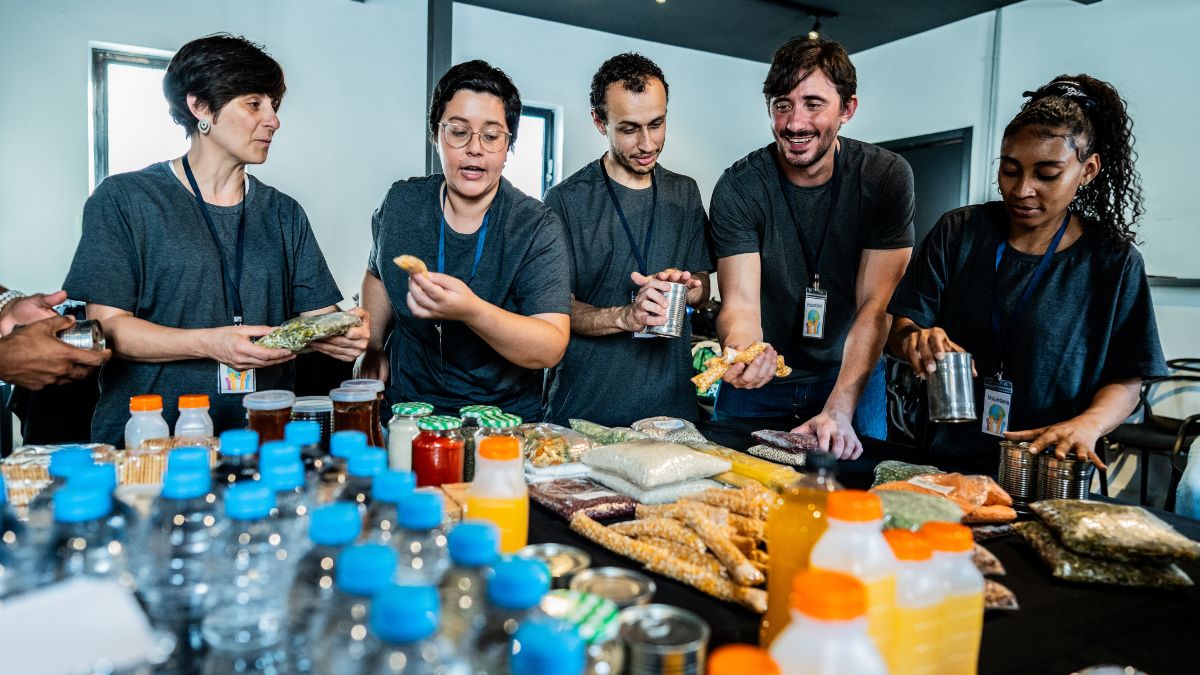
- Its value is mutual: communities benefit from volunteers’ time and skills, while volunteers can gain relationships, confidence, knowledge, purpose, and belonging. The distinction between “giver” and “receiver” becomes less fixed because everyone involved can contribute, learn, and benefit.
- Motivations are diverse: people may volunteer to give back, respond to injustice, support a cause, honor cultural traditions, or help in a crisis. No single motivation defines a “good” volunteer.
- Informal contributions matter: mutual aid, neighborly help, and community action should be valued alongside formal volunteering through organizations.
- Volunteers are partners, not simply resources: their experience, insight, and personal development should be considered, rather than measuring their value only by hours given or tasks completed.
Recent research supports this reciprocal view of volunteering. A longitudinal study of 19,821 middle-aged and older adults in 15 European countries linked regular volunteering with greater emotional wellbeing and fewer limitations in daily activities; it also found that stronger wellbeing made continued volunteering more likely. VSO’s “Volunteering Together” research in Nepal, Tanzania, and Uganda reached a similar conclusion: international volunteers contributed specialist expertise, fresh perspectives, and donor attention, while community and national volunteers brought local knowledge, trusted relationships, and long-term presence. All groups gained skills, confidence, and cross-cultural understanding, achieving together what none could have achieved alone.
The reciprocal nature of volunteering carries an important message: its value lies not only in what volunteers give, but also in the relationships, learning, and shared purpose created through the exchange. This is what it means to move “beyond giving back”. Volunteering is an expression of radical generosity that strengthens communities, deepens our shared humanity, and creates lasting benefits for everyone involved.
This year, for the first time, IAVE and GivingTuesday are co-hosting Generosity Week, December 1–5, a week of action that connects GivingTuesday on December 1 with International Volunteer Day on December 5. You don’t need to start from scratch: bring what you already have planned for December, including your IVY 2026 activities, under the Generosity Week banner. Then add your activities to the Global Action Map so they appear alongside actions from around the world.
Throughout Generosity Week, and especially on International Volunteer Day, thank your volunteers for the time and energy they give to others and their communities. Invite them to share what they gain in return. Their reflections may be just what inspires someone else to get involved.